Hear it
The amp
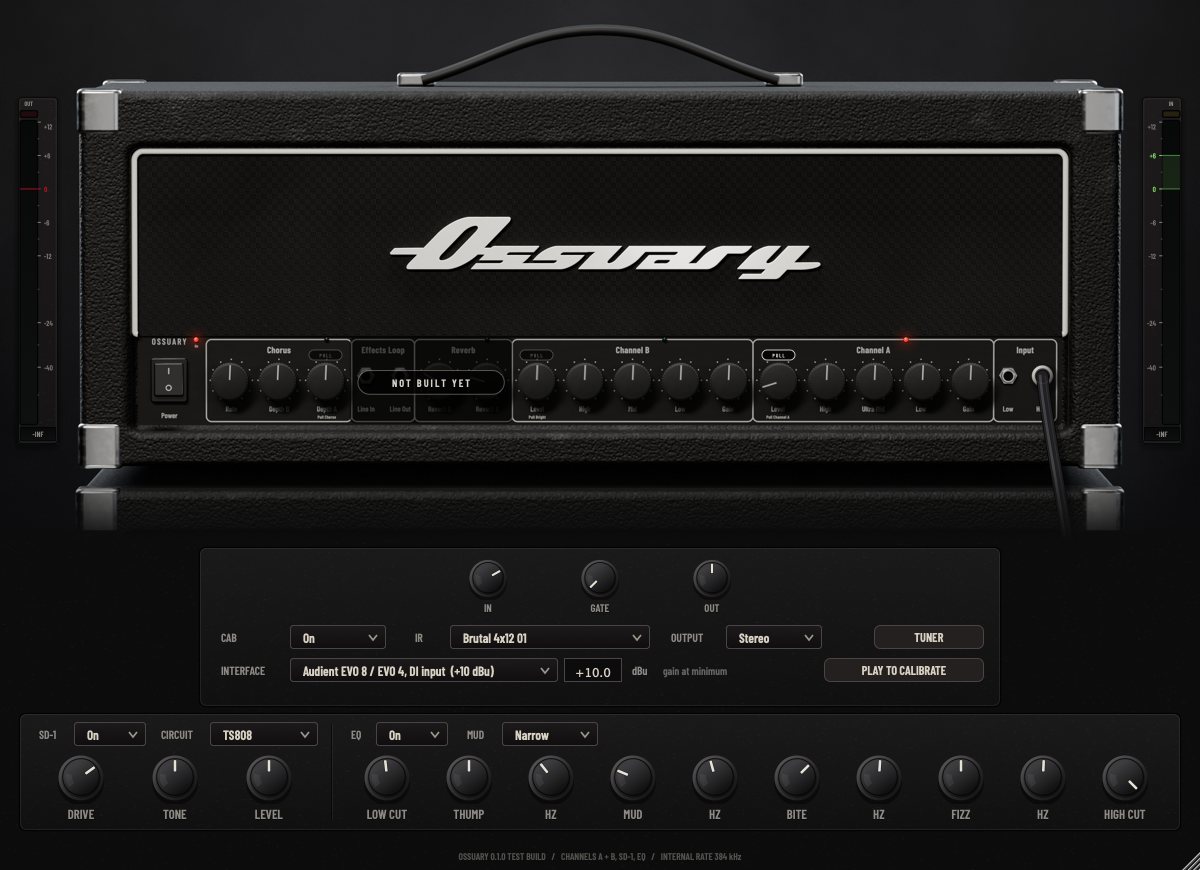
Built from Ampeg's own schematics. The circuit goes into ngspice first, then into a realtime engine that is checked against it.
Channel A
With ULTRA MID
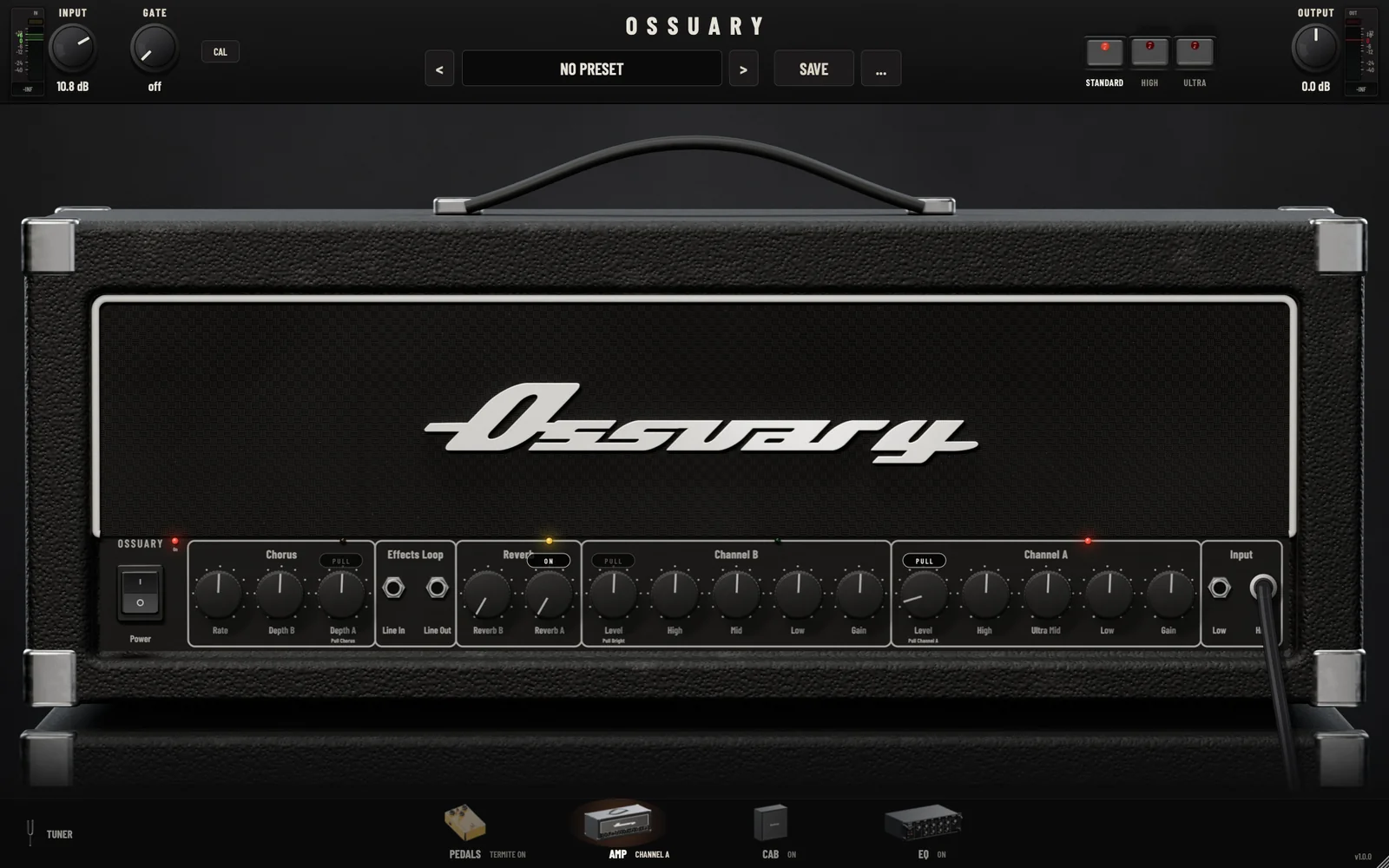
Two clipping stages, a shelving EQ before them and the ULTRA MID after. CHANNEL is the pull switch on its LEVEL, as on the amp.
GAIN · LOW · ULTRA MID · HIGH · LEVEL
Channel B
With BRIGHT
Two clipping stages, a HIGH before the gain and the LOW and MID stack after. BRIGHT is the pull switch on its LEVEL.
GAIN · LOW · MID · HIGH · LEVEL · BRIGHT
Chorus
The amp's chorus board
Stereo as on the amp: the chorus on the left output, the dry signal on the right. Mono sums the two. DEPTH A works on channel A, DEPTH B on channel B.
RATE · DEPTH A · DEPTH B
Reverb
The spring reverb
The driver, the return and the REVERB A / B controls from Ampeg's schematic and parts list. The schematic does not name the tank, so the model uses a common four-spring tank of the period. The reverb goes through the power amp and the cab, as on the amp.
REVERB A · REVERB B
Inputs, power amp
The power amp
From Ampeg's power amp schematic. The High and Low inputs as on the amp (Low is the same input 6 dB down). POWER switches the amp off: the pedals then go straight to the EQ and the cab.
Quality
Standard, High, Ultra
High and Ultra run the amp at a higher internal rate, for less aliasing, at about twice and four times the CPU of Standard. Offline renders always use Ultra.
CHARNELL
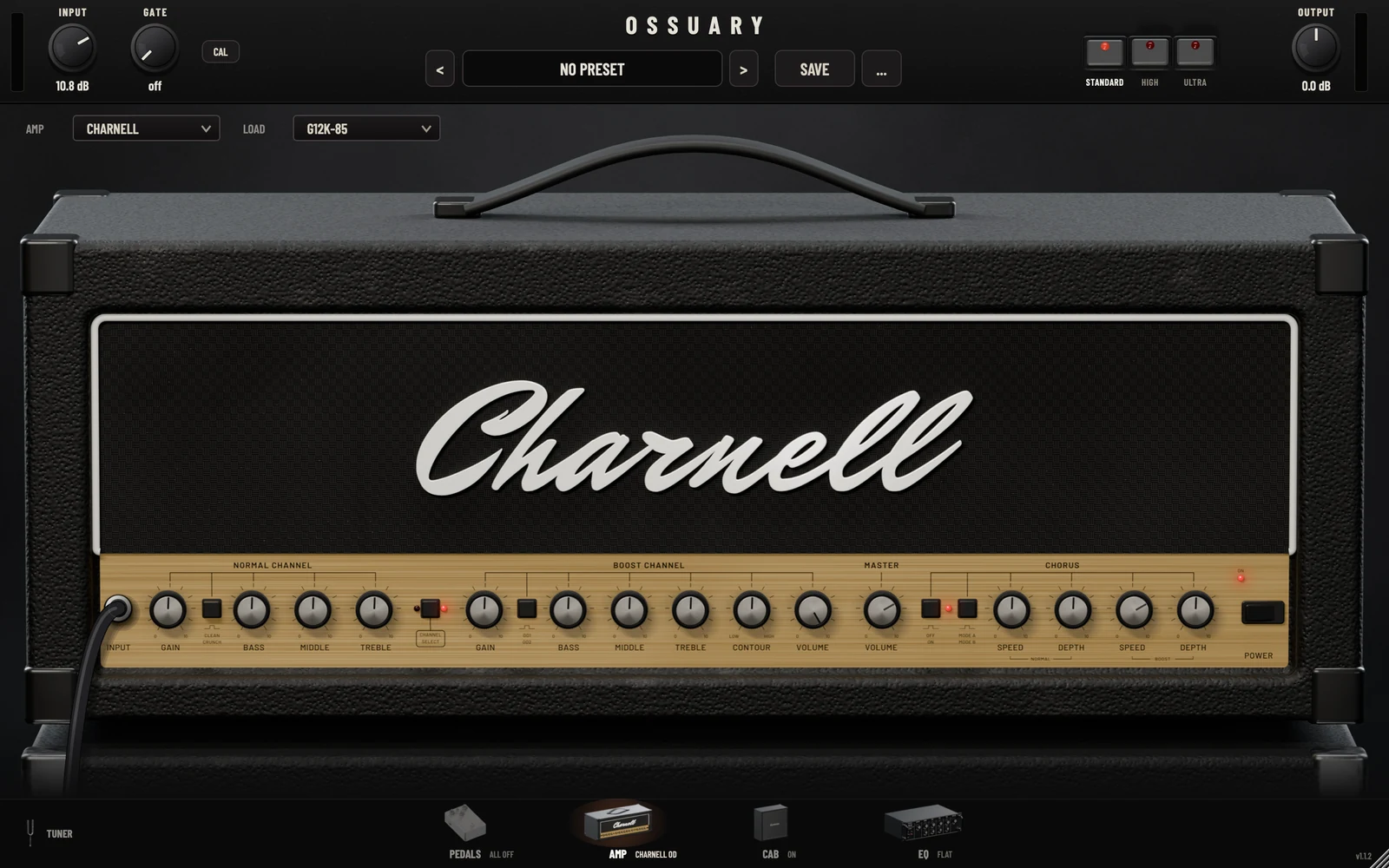
The second amp: the Marshall Valvestate 8100 (1994), built from Marshall's schematics the same way. Choose it in the AMP box on the amp page.
Normal channel
Clean and Crunch
The op-amp preamp and its tone stack. CRUNCH switches the LED clipper in, as on the amp.
GAIN · BASS · MIDDLE · TREBLE · CLEAN / CRUNCH
Boost channel
OD, with the ECC83
The op-amp gain stage and the LED clipper into the ECC83, then the Marshall tone stack and CONTOUR. OD1 and OD2 as on the amp.
GAIN · BASS · MIDDLE · TREBLE · CONTOUR · VOLUME · OD1 / OD2
Chorus
The 8200's Bi-Chorus
Modelled on the Marshall 8200's chorus board: one LFO for the normal channel, one for the boost channel. MODE A is short and flanger-like, MODE B the traditional chorus. Stereo as on the 8200.
ON · MODE · SPEED · DEPTH (normal and boost)
Power amp, load
The speaker it drives
The 8100's power amp follows the speaker's impedance. LOAD chooses that speaker for both amps: a G12K-85, a closed 4x12 of Vintage 30s, an Eminence Karnivore or an 8 ohm resistor. In High and Ultra, CHARNELL's output transistors are modelled in full.
MASTER · LOAD
The pedals
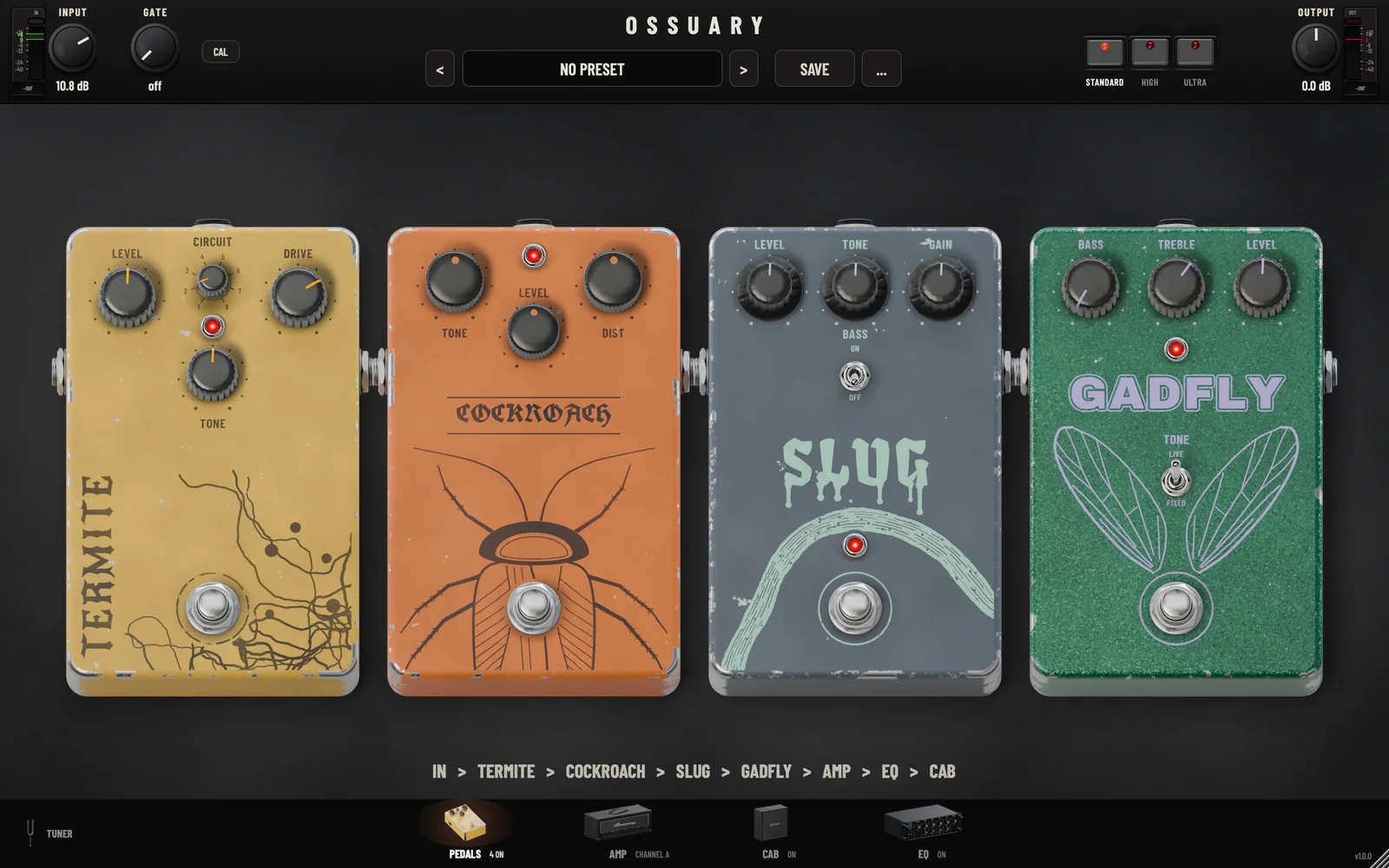
Four of them, in front of the amp. Each one on or off, in any order you drag them.
Boss SD-1
Termite
The SD-1, with seven more circuits on its selector: TS808, TS9, OD-1 and four modded versions.
DRIVE · TONE · LEVEL · CIRCUIT
Boss DS-1
Cockroach
The DS-1.
DIST · TONE · LEVEL
Inverted Cross Audio MUFF
Slug
A Big Muff family circuit, modelled from Inverted Cross Audio's MUFF. BASS switches to the bass variant in its build document.
GAIN · TONE · LEVEL · BASS
Fortin 33
Gadfly
A boost for in front of the amp, modelled on the Fortin 33. TONE at LIVE plays BASS and TREBLE, the tone controls of the TC Electronic Integrated Preamp the 33 is based on. FIXED is the 33's fixed tone.
BASS · TREBLE · LEVEL · TONE
The cab
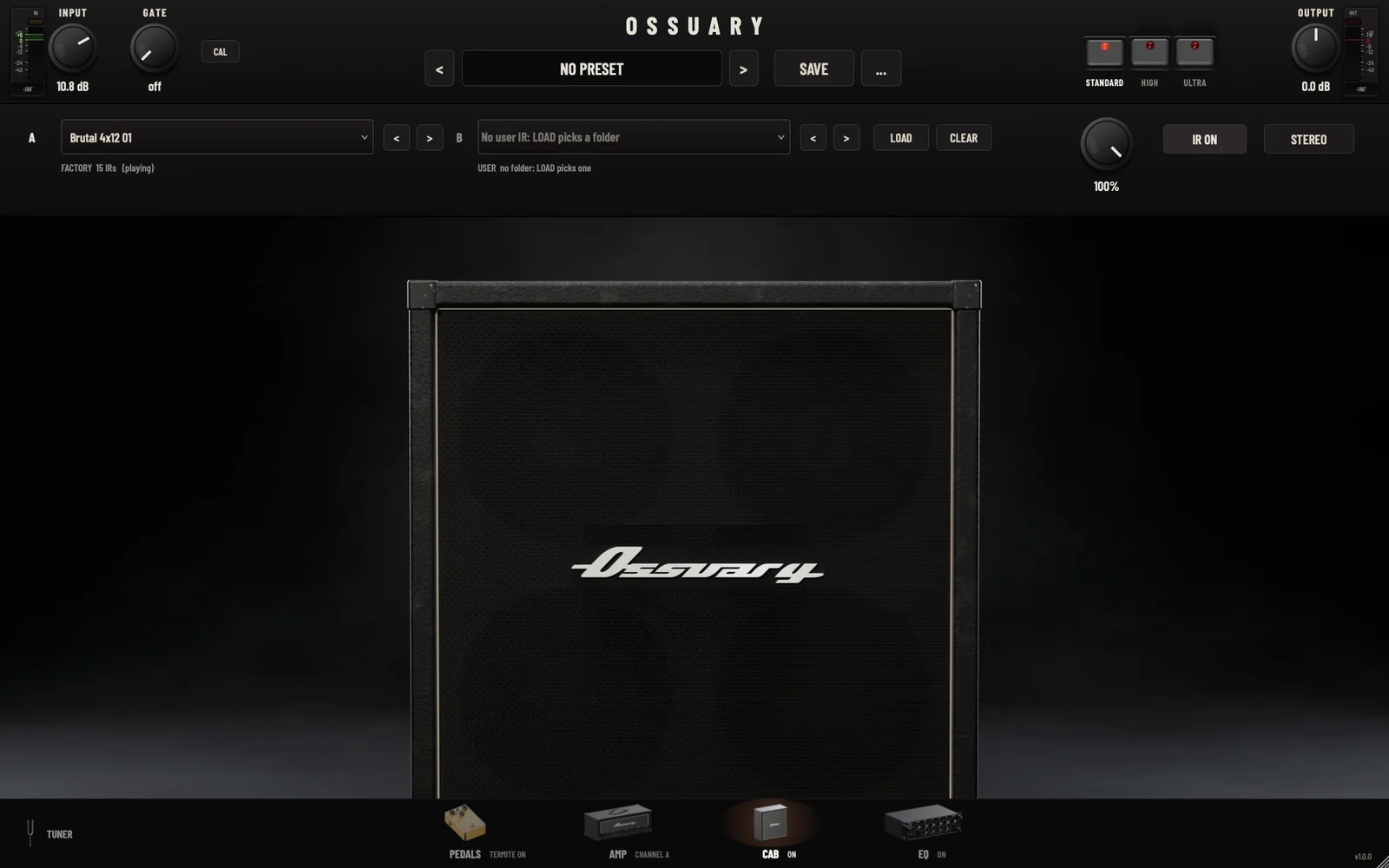
Four factory IRs by D-Night Audio, at 44.1, 48, 88.2 and 96 kHz, or your own WAV or AIFF files from a folder you choose. MIX sets how much of the signal goes through the IR. With IR ON off, the speaker signal comes out without a cab, for an IR loader of your own.
Factory IRs by D-Night Audio, with their permission. More of their IRs at d-night-audio.com.
EQ, gate, tuner
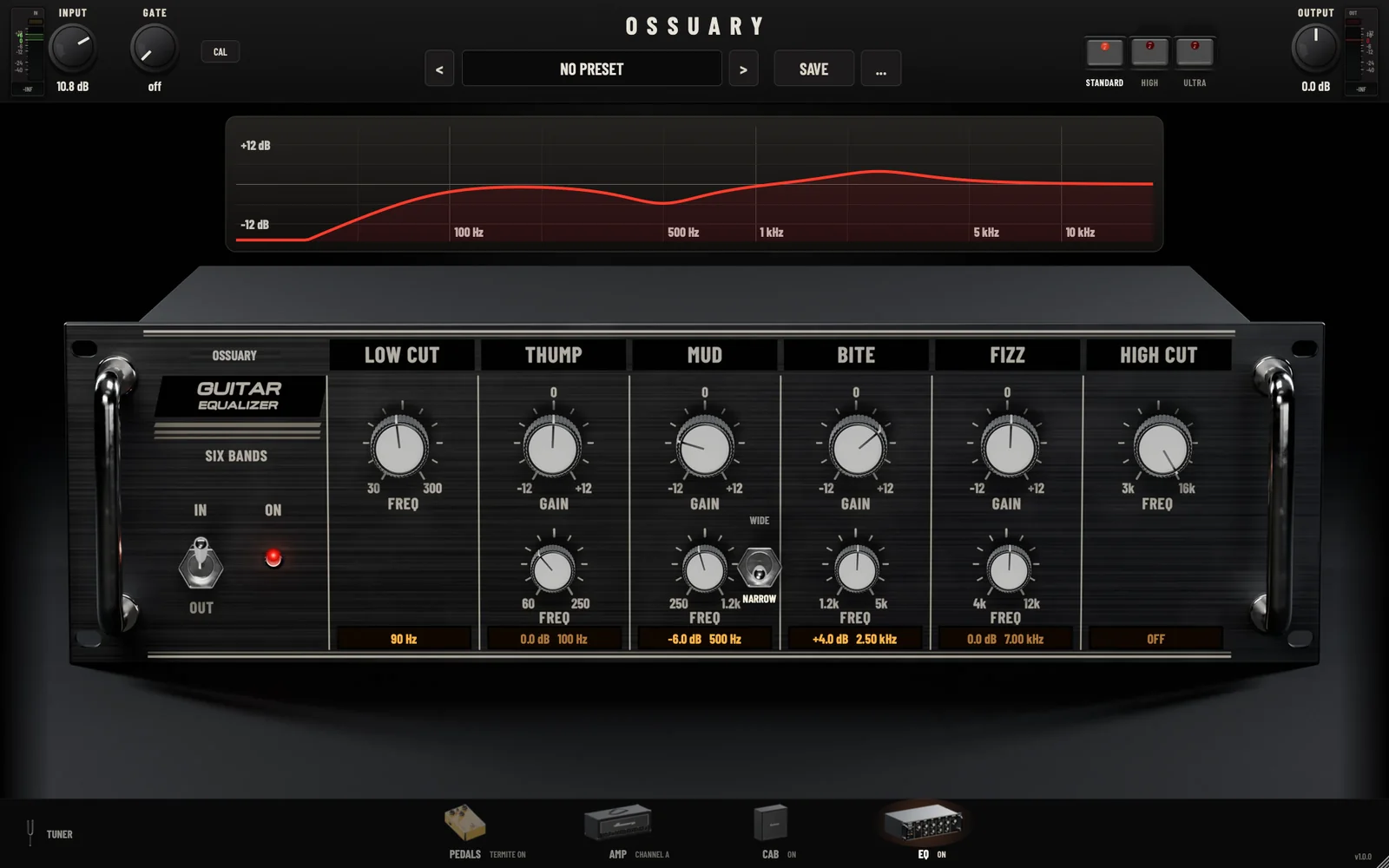
A six-band EQ after the amp: LOW CUT, THUMP, MUD (wide or narrow), BITE, FIZZ and HIGH CUT. A noise gate at the power amp's input, after the preamp's distortion, so the reverb and chorus tails ring on when it closes. A tuner. Presets. Input calibration that matches the plugin to your audio interface.
The plugin
Get it
14-day free trial. The licence activates on your own computers and works offline after activation.
Linux
Linux x86_64: VST3, LV2, CLAP and standalone.
glibc 2.35 or newer (Ubuntu 22.04 or later).
The macOS installer is signed and notarised by Apple. VST3, Audio Unit and the standalone app are separate checkboxes: install only what your DAW uses. The Windows installer is code-signed and installs the VST3 and the standalone app. The Linux download is a .tar.gz archive with the VST3, the LV2, the CLAP and the standalone app.
The trial starts by itself the first time you open the plugin's window, not when you install it, and needs an internet connection then. Offline, START TRIAL in the plugin starts it later. When the 14 days are over, each instance plays for one minute, then goes silent until a licence key is activated. Bought a licence? Click LICENCE in the plugin's top bar, paste your key and click ACTIVATE.